AI Automation Tool Stack 2026: What We Actually Use in Production
Articles
BLOG DETAILS04 MAR 2026Updated 06 MAR 20268 min read
A practical breakdown of the tools we use for automation, CRM, messaging, and AI workflows in SMB environments.
Most companies think their problem is choosing the right AI tool. In practice, that is rarely the real bottleneck. The real challenge is somewhere else: building a stack that runs reliably in production, is logically structured, and remains scalable as more leads, customer requests, and exceptions start coming in.
Because AI automation only works when multiple systems work well together. A standalone model or a smart chatbot may sound impressive, but without solid orchestration, a clear CRM structure, and well-defined communication channels, what you usually get is chaos. That leads to disconnected workflows, unclear ownership, and errors that only become visible once they start costing money.
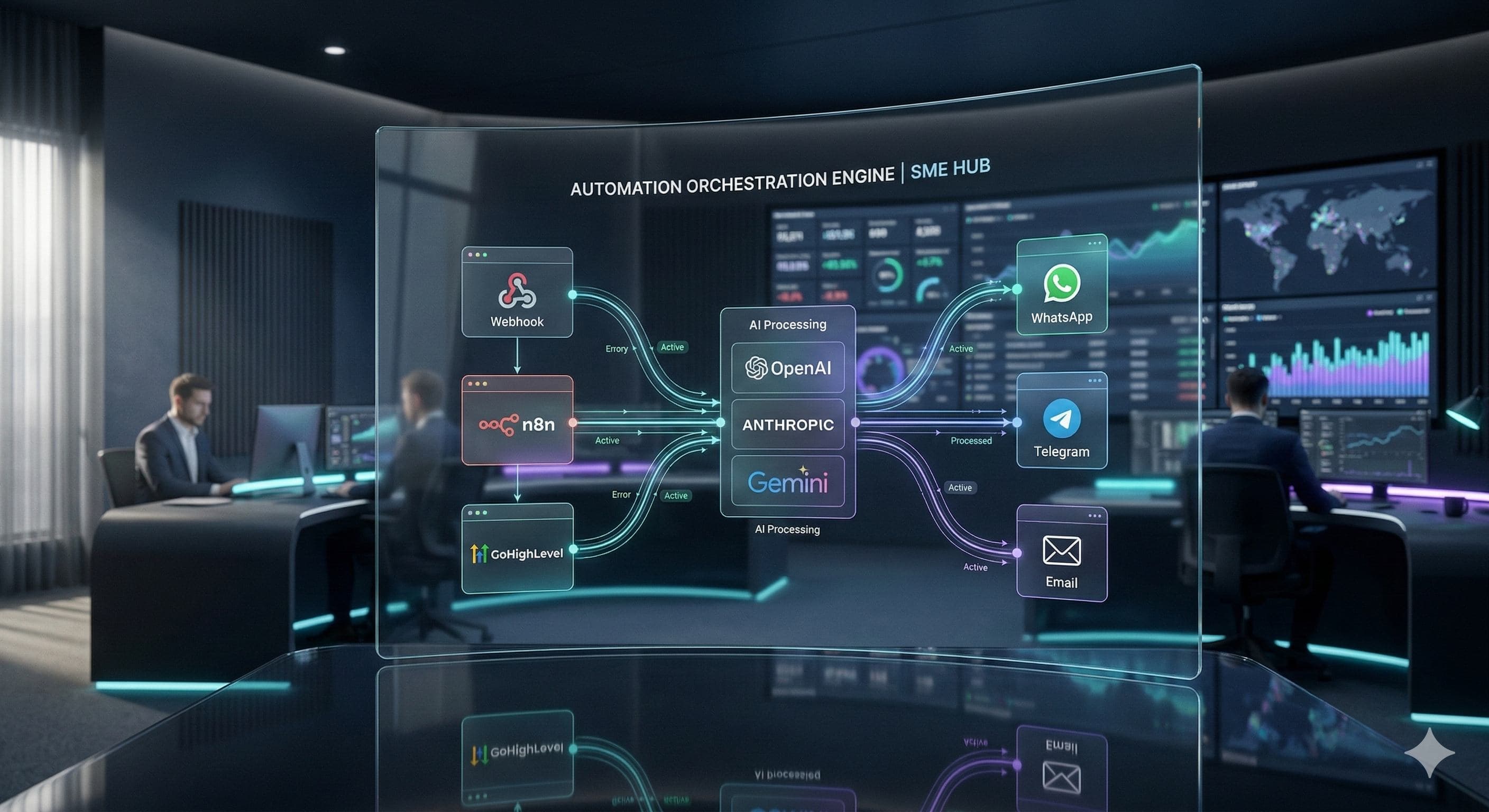
In this blog, we break down the AI automation tool stack we use most often in 2026 for SMBs. Not a theoretical list of a hundred tools, but a practical setup we actually deploy in production: n8n for automation, GoHighLevel as the CRM, OpenAI, Anthropic, and Gemini for LLM tasks, and WhatsApp, email, and sometimes Telegram for communication.
Why a solid AI automation stack matters more than ?the best tool?
A lot of business owners look for the best AI tool, but that is usually the wrong question. The better question is: how do you make your processes faster, smarter, and more reliable without your team getting stuck in manual work?
A strong tool stack helps you do exactly that. Not just by automating tasks, but by connecting systems in a way that makes the entire process work better. Think about lead routing, follow-up, support, internal notifications, reporting, and AI-powered data enrichment. Once those pieces are connected properly, that is where the real gains start to happen:
less manual work
faster response times
better customer experience
more control over leads and customer status
scalability without immediately hiring more people
fewer errors in handoffs between systems
The real advantage is not in individual tools, but in how they work together.
Our AI automation tool stack for 2026
The stack we use most often consists of four layers:
1. Automation: n8n
For automation and orchestration, we use n8n. This is the core of the stack. It is where we build workflows that connect systems, enrich data, trigger actions, and handle failures.
For us, n8n is not a nice extra. It is the layer that makes everything controllable. The moment a lead comes in, a form gets submitted, a message arrives, or a status changes, n8n makes sure the right follow-up actions are executed automatically.
We use n8n for things like:
lead routing to the right pipeline or team member
data enrichment through AI or external sources
automated follow-up flows
triggers based on CRM status
internal team notifications
retries for failed API calls
fallback logic when AI output is not usable
reporting and synchronization between different tools
The biggest strength of n8n is flexibility. For SMBs that need more than standard out-of-the-box automations, that flexibility matters. Most business processes are just complex enough that simple template-based tools are not enough.
2. CRM: GoHighLevel
For CRM, we use GoHighLevel. In most cases, this becomes the source of truth for lead status, customer status, pipelines, contact details, and follow-up.
That point matters because many businesses make the mistake of letting multiple systems act as the source of truth at the same time. Then the status of a lead lives in an inbox, a spreadsheet, a chatbot platform, and maybe somewhere inside a sales dashboard as well. That may seem manageable at first, until it breaks.
We prefer to keep it clean: GoHighLevel is the central system for commercial and customer-related status data. That means automation and messaging do not create their own version of reality, but operate from one clear foundation.
We often use GoHighLevel for:
lead management
pipelines and deal stages
contact management
task assignment
appointment flows
nurture sequences
follow-up for no-shows or missed leads
review requests and customer follow-up
The combination of GoHighLevel with n8n is strong because it gives you both structure and flexibility. GoHighLevel keeps the customer process organized, while n8n handles the logic and integrations.
3. LLMs: OpenAI, Anthropic, and Gemini
For AI tasks, we do not use just one model. Depending on the use case, we use OpenAI, Anthropic, or Gemini. That is an important distinction. A lot of businesses want one model to handle everything, but that is usually a mistake.
Not every task requires the same kind of model. Sometimes you need a model that is strong at summarizing or structuring information. Sometimes you want strong reasoning, fast output, or better handling of long context windows. That is why we choose the most suitable LLM based on the actual use case.
We use LLMs for things like:
summarizing conversations or support requests
classifying leads
generating email drafts
structuring intake data
analyzing customer questions
writing internal summaries
sentiment analysis
creating draft replies for support or sales
What matters here is that, in our stack, an LLM almost never runs fully on its own. The model is part of the process, not the process itself. Orchestration, validation, and handoff matter just as much as the AI output.
4. Messaging: WhatsApp, email, and sometimes Telegram
For communication, we usually use WhatsApp or email. Sometimes Telegram as well, depending on the audience or use case.
Messaging is the layer where the end user actually experiences the automation. That is exactly why this layer needs to be designed with extreme care. A workflow can be technically perfect and still fail if the message is sent at the wrong time, is unclear, or does not offer a logical next step.
We often use WhatsApp for fast follow-up, reminders, status updates, and low-friction customer communication. Email remains strong for longer communication, confirmations, nurture flows, and documentation. Telegram is sometimes used for internal notifications or niche use cases.
These messaging channels are used for things like:
lead follow-up
appointment confirmations
reminders
support updates
internal alerts
escalations to team members
follow-up on incomplete forms
handoff from AI to human
The choice between WhatsApp, email, or Telegram does not depend on which one feels more modern. It depends on behavior. Where does the user respond fastest? Where is the context clearest? And which channel fits the stage of the customer journey?
How this stack works together in practice
The power of this tool stack is not in the individual components, but in how they work together inside one logical process.
A simple example:
A lead fills out a form.
The data enters GoHighLevel.
n8n triggers a workflow.
An LLM evaluates which category or service the lead fits into.
The lead is automatically routed to the right pipeline or team member.
A WhatsApp or email message is sent immediately.
Internal notifications are triggered when manual follow-up is needed.
If there is no reply, an automated follow-up flow starts.
If the AI is uncertain or the input is unclear, a human handoff is triggered.
This may sound simple, but these kinds of processes create huge gains in speed, follow-up quality, and conversion. Especially for SMBs, where speed often makes the difference between a warm lead and a missed opportunity.
Why we do not choose an unnecessarily large stack
One mistake we see all the time is businesses building an AI stack with too many tools. Every small problem gets another platform added to the mix. The result is predictable: higher costs, more complexity, and less visibility.
More tools do not automatically create more efficiency. In many cases, they mainly create more maintenance.
That is why we prefer to keep the stack compact and functional. With n8n, GoHighLevel, strong LLMs, and a limited number of messaging channels, you can already build an impressive amount. That keeps the environment not only more affordable, but also easier to manage, test, and scale.
For business decision-makers, that matters. You do not need an impressive tool map. You need a system that works reliably, delivers measurable results, and does not need to be rebuilt every time something changes.
What actually makes the difference in production
Most automation projects do not fail because of bad intentions. They fail on details. In demos, everything works. In production, you deal with exceptions, incomplete data, timing issues, and human mistakes.
That is why we focus less on pretty workflows and more on these four factors.
Reliability in edge cases
The real quality of an automation stack only becomes visible when something does not go according to plan. Think about duplicate leads, missing fields, poor input, or failed API calls.
A good stack handles that. Not with panic, but with logic.
Clear ownership per system
Each system should own one type of information. In our stack, GoHighLevel owns contact and status data. n8n owns workflow logic. The LLM owns analysis or generation, but not process decisions without a control layer.
The moment those roles start overlapping, errors follow.
Fast debugging when something fails
If something breaks, you need to see quickly where it failed. Which trigger broke? Which status did not sync correctly? Which model output was unusable?
The faster you can see that, the more scalable your stack remains.
Human fallback instead of silent failures
One of the dumbest mistakes in AI automation is a silent failure. The system looks like it works, but somewhere in the process it stops without anyone noticing.
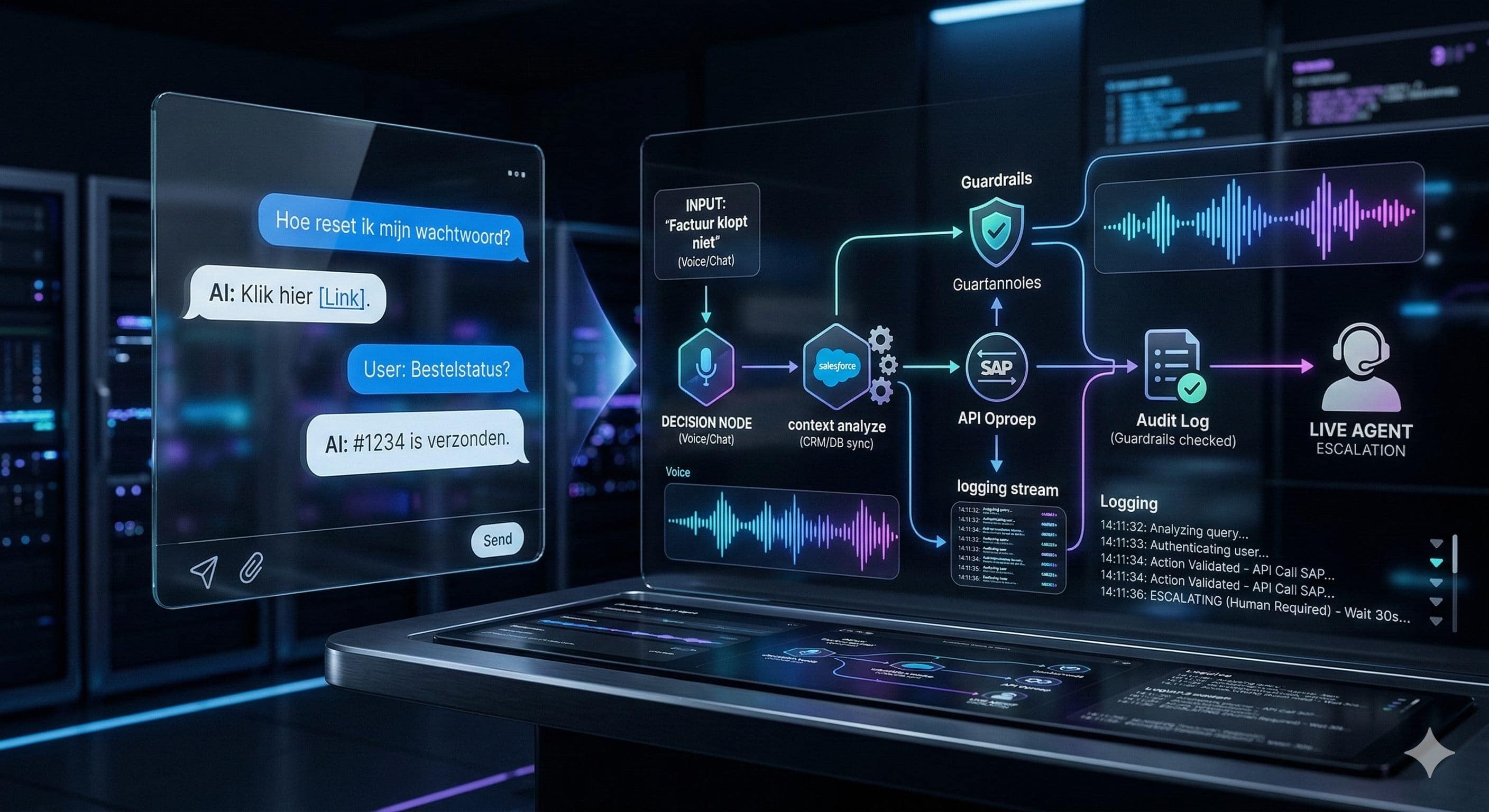
That is why we would rather build in a human fallback. If AI output is uncertain, a message is not delivered, or a lead cannot be classified correctly, the process should escalate to a person. That prevents lost revenue and poor customer experience.
When you should adjust your stack
Not every new tool deserves a place in your stack. We only adjust a stack when there is a clear reason to do so.
For example, when:
workflows become too fragile
response times get too slow
maintenance takes too much time
a tool lacks a strong API or proper scalability
the customer experience gets worse
teams do not have enough visibility into what is happening
manual work starts creeping back into the process
New tools do not automatically fix poor process design. In many cases, it is smarter to simplify the process first, make responsibilities clearer, and only then decide whether a tool change is actually necessary.
Which companies this stack is best suited for
This AI automation tool stack is especially useful for companies that already deal with recurring leads, customer requests, or operational processes. Think of service businesses, agencies, coaches, local businesses, sales-driven teams, and support-focused organizations.
For those types of companies, this stack often creates direct value through:
faster lead follow-up
higher conversion rates
less manual administrative work
better customer communication
more scalability without immediate team growth
better visibility into operations and performance
For very small businesses without enough volume, a more advanced stack may still be too early. But once processes start repeating and speed becomes important, automation starts to create real business value.
The main lesson: do not choose the most tools, choose the right structure
The best AI automation stack is not the one with the most logos on it. It is the one where each system has a clear role, data flows logically, and exceptions are handled properly.
For us, this combination works best in production:
n8n for automation and orchestration
GoHighLevel as the CRM and central customer structure
OpenAI, Anthropic, and Gemini for AI tasks
WhatsApp, email, and sometimes Telegram for communication and handoff
This is not a hype stack. It is a pragmatic stack built around reliability, speed, maintainability, and results.
Conclusion
AI automation is not about individual tools. It is about building a system that keeps working when things get busier, messier, and more complex. That is where the right choices start to matter.
With a compact but strong stack, SMBs can move faster, reduce costs, improve customer experience, and build a scalable foundation for growth. Not by automating everything for the sake of automation, but by designing smarter processes with clear logic and control.
Want to know whether your current process is a good fit for this approach, or where the biggest bottleneck is in your automation stack right now? That is exactly where a solid AI and automation audit creates immediate value.